Neural Networks Learn to Reason About Physics Like Humans
Stanford researchers develop AI models that understand intuitive physics, predicting object behavior and interactions with human-like common sense.


Beyond Pattern Recognition
The Stanford work addresses a long-standing limitation: grasping intuitive physics. Models now reason about gravity, momentum, and structural stability in ways that generalise beyond training data, rather than memorising surface patterns.
The benchmark is common-sense physical reasoning — the kind a five-year-old handles without effort, and that had quietly remained hard for AI.
Applications in Robotics and Simulation
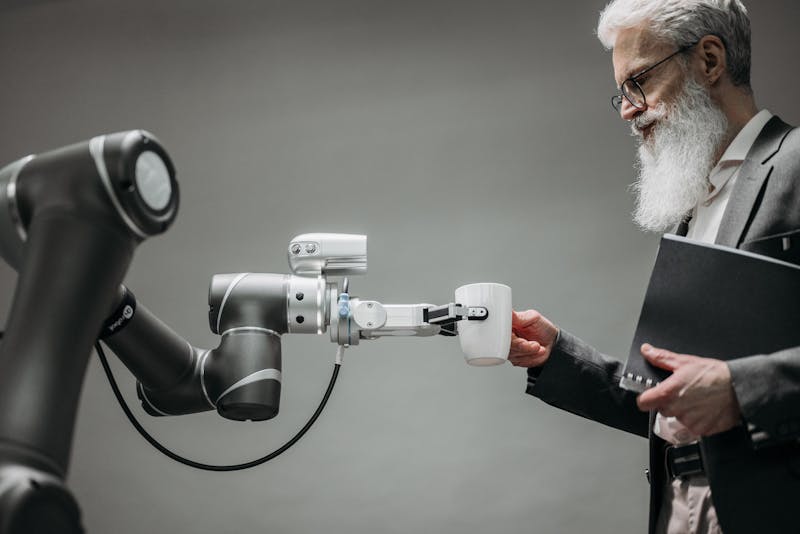
Robotics is the obvious beneficiary. A robot that can predict how a stack of objects will respond to being nudged plans more safely and recovers from surprises more gracefully. Simulation and game physics pick up the same advantage.
Industrial design and engineering verification are quieter wins, but real ones, especially where rapid iteration between CAD and physical prototyping matters.
The Cognition Debate
Whether this constitutes "understanding" in a cognitively meaningful sense is exactly the debate you would expect. The practical test is whether the systems generalise to new physical scenarios — and early evidence suggests they do, at least for the middle of the distribution.
Edge cases and adversarial inputs remain active research. The honest answer is that we have a better tool than before, and a partial answer to a hard question.